
Diamonds
Natural diamonds, explained
The four Cs and everything else that decides a diamond’s character, quality and value, in plain language.
The basics
What makes a diamond natural
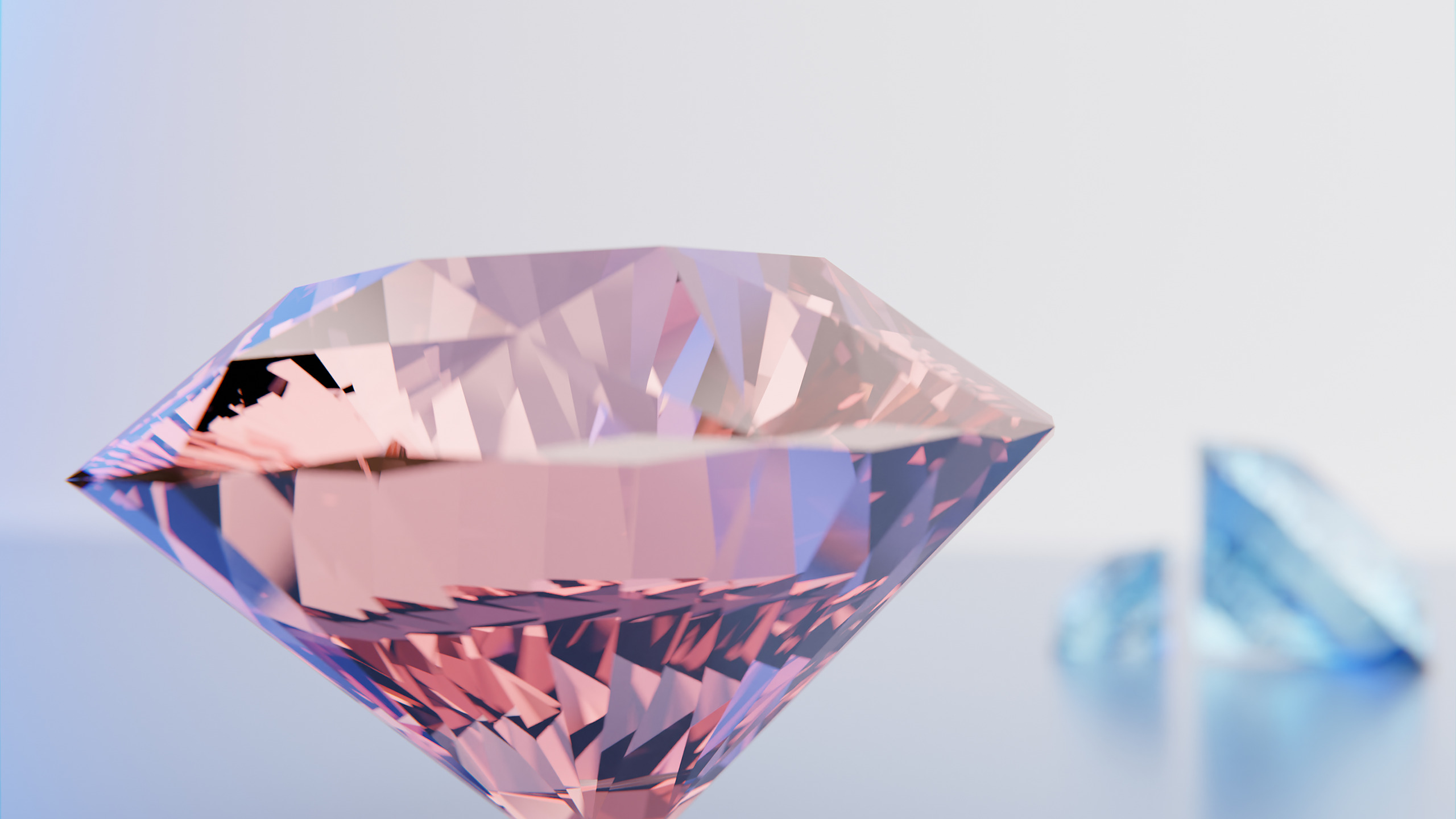
A natural diamond is a crystal of pure carbon that formed deep inside the earth over more than a billion years, then travelled to the surface in volcanic eruptions. It is mined, cut and polished, but never made.
That origin is why every natural diamond is unique. Its colour, its tiny internal features and its proportions are a record of how it formed and how it was cut, and they are exactly what the four Cs describe.
At a glance
The four Cs
How a natural diamond is judged
Cut, colour, clarity and carat are the international language of diamond quality. Here is what each one means.
Cut
Brilliance is made by the cutter
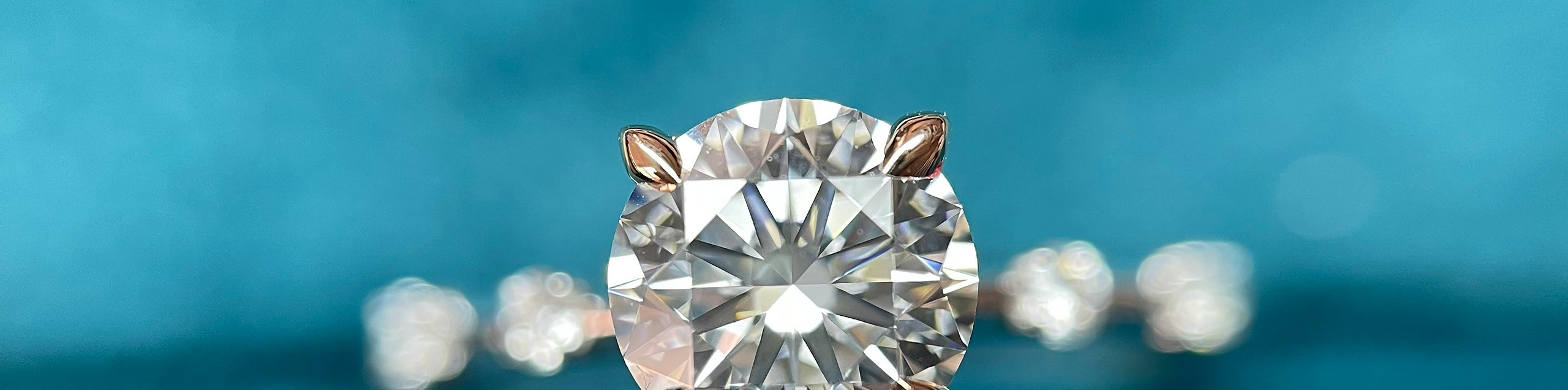
Cut is the quality of a diamond’s proportions, symmetry and polish, and it is not the same as shape. Of the four Cs it has the greatest effect on how a diamond sparkles: a well-cut stone returns light through the top, while a shallow or deep cut lets it leak away.
- Proportions: table size, depth and facet angles
- Symmetry: how precisely the facets are aligned
- Polish: the finish of every facet surface
Cut grade scale
Colour
The less colour, the more rare
For white diamonds, colour grades the absence of colour on a scale from D (colourless) to Z (light yellow or brown). The difference between neighbouring grades is subtle and usually only visible when stones are compared side by side.
- D to F: colourless, the rarest range
- G to J: near colourless, excellent value
- Fancy colours are graded on intensity, not on this scale
Colour grade scale
Fancy-coloured diamonds (blue, pink, yellow and others) are graded separately, on the strength of their colour.
Clarity
Natural features, honestly graded
Clarity describes the tiny internal features (inclusions) and surface marks (blemishes) found in natural diamonds, judged under 10× magnification. Most natural diamonds have some; the fewer and less visible they are, the higher the grade.
- Judged by size, number, position and visibility
- Many inclusions cannot be seen without magnification
- We disclose the clarity of every stone we describe
Clarity grade scale
Carat
Weight, not size
Carat is the weight of a diamond: one carat is 0.2 grams, divided into 100 points. Weight is not the same as size, because cut and shape change how large a stone looks face-up. Prices rise sharply at round-number weights such as 0.50, 1.00 and 2.00 carats.
- Available from fine melee to larger single stones
- Shape and cut affect how big a carat looks
- Just below a round weight can offer better value
Approximate size, round brilliant
1 carat = 0.2 grams = 100 points. Diameters are typical for a well-cut round brilliant and are a guide only.
More detail
Beyond the four Cs
The other details that complete a diamond’s description and help you compare stones accurately.
Fluorescence
The glow some diamonds show under ultraviolet light. It is graded from none to very strong and can slightly affect appearance and price.
Polish and symmetry
Graded separately from cut, they describe the surface finish and the precision of the facet shapes and alignment.
Measurements
Length, width and depth in millimetres show a stone’s true face-up size and help judge its proportions.
Shape
Round, emerald, pear, princess, heart, oval and more. Shape is a matter of style; each has its own character.
Laboratory reports
An independent grading report records a diamond’s measured characteristics. We can provide reports on request.
Natural origin
Natural diamonds form in the earth. We supply natural diamonds only and describe every stone as such.
Specification guide
Tell us what you are looking for
The clearer your specification, the better the selection we can send. A short note covering the points on the right is all we need to begin.
Diamond FAQ
About natural diamonds
Short answers to the questions we are asked most about quality and grading.
Which of the four Cs matters most?
It depends on the piece. Cut has the biggest effect on sparkle, colour and clarity affect how clean and white a stone looks, and carat sets its size and a large part of its price. We help you balance all four against your budget.
What colour grade counts as colourless?
Grades D, E and F are colourless. G to J are near colourless: the difference from the top grades is hard to see once a stone is set, which is why they are popular for value.
Are inclusions a bad thing?
Not necessarily. Inclusions are natural features that form part of a diamond’s identity. What matters is how visible they are. Many stones graded VS or SI look clean to the naked eye.
Does fluorescence affect a diamond?
Fluorescence is a glow under ultraviolet light. In most stones it is faint and has little visible effect, though strong fluorescence can slightly change appearance and price. We list it for every stone.
Is carat the same as size?
No. Carat is weight. Two diamonds of the same weight can look different in size depending on shape and cut, so we also give measurements in millimetres.
What is the difference between natural and lab-grown diamonds?
Natural diamonds formed in the earth over a very long time. Lab-grown diamonds are made in a laboratory. We supply natural diamonds only.
Still have a question? Contact us
Enquire
Looking for a particular diamond?
Send us your specification and we will return with a considered selection of natural diamonds.